Who owns what
Most buying advice in this category is built on a comparison that is partly fictional — pick between these five brands, as if five independent companies were competing for the same pound. In two of the biggest cases they are not. The ownership is public; it just is not printed on the box.
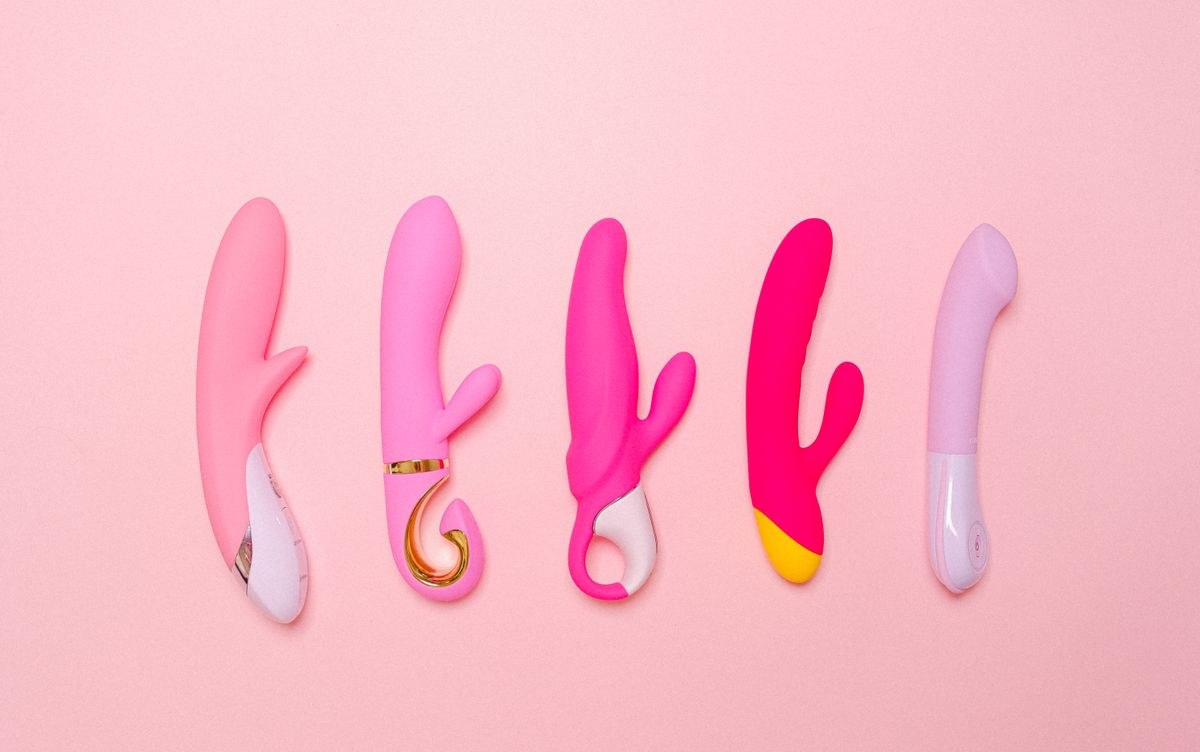
Five brands, one balance sheet
Lovehoney started in Bath in 2002, founded by Richard Longhurst and Neal Slateford. The group's own history sets out what happened next, and the sequence matters more than any single entry:
- 2008 — We-Vibe is founded by Bruce and Melody Murison in Ottawa, Canada
- 2014 — Womanizer is founded in Germany by Michael and Brigitte Lenke, using suction rather than vibration
- 2018 — We-Vibe and Womanizer come together under a single company, WOW Tech
- 2020 — Lovehoney acquires the Swiss retailer Amorana
- 2021 — Lovehoney and WOW Tech merge into Lovehoney Group; the combined business wins the Queen's Award for Enterprise for the second time
- 2022 — the group acquires the French retailer espaceplaisir
By the end of that sequence, three of the names most often put side by side in British buying guides — Lovehoney, We-Vibe, Womanizer — sit inside one company. We-Vibe is Canadian. Womanizer is German. Neither is a British brand, and both are owned by the same group as the Bath retailer that is usually described as the British one.
The group now reports 11 offices, more than 850 staff and over 3,200 products. That is not a market of rivals. It is a portfolio.
Three names, one address
The second cluster is harder to see from Britain, because nothing about it is on a UK shop page.
Satisfyer GmbH is registered at Am Lenkwerk 3, 33609 Bielefeld. Fun Factory Germany GmbH is registered at the same street address. Triple A Sales GmbH is registered there too. All three name the same managing director, Sven Pelka, and all three publish the same telephone number.
This is checkable because German law requires it. Every commercial site must carry an Impressum naming the company, the court that registered it and the registration number — which is why this cluster can be documented in a way that a British brand page usually cannot.
What the register does not tell you is the shareholding. These could be three companies run by one person rather than one group with one owner. For a buyer the distinction barely matters, because the effect is the same: this is not a set of independent businesses competing with each other.
One detail from the same page is the useful one. Fun Factory's own shop is not operated by Fun Factory. The Impressum states plainly that Triple A Sales GmbH is the customer's direct contractual partner for the products sold there. The brand and the seller are two different companies at the same address.
What this does not mean
It does not mean the products are the same. A group that owns five brands usually does keep them genuinely separate — different engineering, different price points, sometimes different factories. Anyone who has used a We-Vibe and a Womanizer knows they are not one product with two logos.
It does not mean the cheaper one is a trick. Groups run cheaper and dearer lines deliberately, and the cheaper line is often the better value.
And it does not mean group ownership is bad for you. A large owner usually means better warranty handling, more consistent materials, and a supply chain that can survive a recall. The alternative — dozens of tiny brands with no leverage — is not obviously better for a buyer.
The one thing it does change is what a price comparison means.
Why a price comparison stops working
If one company sets both prices, the gap between them is a positioning decision, not a market outcome. Nobody is undercutting anybody; the two prices were chosen together, by the same people, to sit at two points on a shelf.
Two conclusions people draw from that gap therefore stop working. The first is that the dearer one must be better — the difference may be a finish and a box. The second is that waiting will close the gap — a portfolio does not compete with itself, so there is no mechanism pushing the two prices towards each other.
None of this is illegal or even unusual. It is how portfolios work everywhere from cars to coffee. It just means that "compare the brands" is a weaker instruction than it sounds, and that the useful comparisons are the ones inside a product rather than between logos.
Why it matters more when something goes wrong
Your contract is with the seller, not with the brand on the box. That seller has a company number, and the number decides some practical things: where a return goes, who answers when it does not arrive, and which country's consumer rules you are relying on.
For the brands in this article, the sellers are:
Bondara — Nagook Limited, company 06009758, registered in Saffron Walden, Essex.
Ann Summers — Ann Summers Ltd., company 01034349, registered in Whyteleafe, Surrey.
Lovehoney — Lovehoney Group UK Limited, company 04637868, registered in Bath.
Satisfyer — Satisfyer GmbH, registered in Bielefeld, Germany.
Fun Factory's own shop — Triple A Sales GmbH, registered in Bielefeld, Germany.
Lovehoney is the interesting case. The group it belongs to is headquartered in Berlin, but the UK site contracts through a company registered in Bath, at a Bath address. A British buyer's counterparty is therefore British, and a return goes to a British address. That is the good outcome, and it is worth knowing that it is not automatic — it is a decision the company made.
How to check any brand yourself
The UK register is free and does not require an account. Search the trading name at `find-and-update.company-information.service.gov.uk`. Four things to look at:
The company number. The prefix tells you what kind of entity it is. A number beginning `BR` means an overseas company with a UK establishment rather than a UK company — which is exactly what you want to know before you rely on UK consumer rules.
The registered office. This is the jurisdiction, not necessarily where the warehouse is. A Surrey address and a Bielefeld address mean different things when a parcel goes missing.
The previous names. Rebrands leave a trail, and the trail often shows when a company changed hands.
The accounts filing date. A company that files on time is a company that still exists in a checkable way.
Sometimes you will get no result at all. Godemiche and Uberkinky both return nothing under those names. That does not mean they are not real — it means the trading name is not the registered name, which is extremely common in this category. The company number is usually in the footer, the privacy policy, or the terms page: one line, in small type, and the one line on the site that is checked against a register rather than written by a marketing department.
What is actually worth comparing
Since brand-versus-brand is a weaker signal than it looks, these are the things that survive:
Warranty length. LELO publishes two years plus a ten-year quality guarantee. Most brands publish nothing comparable, and the absence is itself information.
Returns window. Bondara states 365 days. The UK minimum for most online orders is 14, so anything far above that is a deliberate policy rather than compliance.
Independent testing. It exists, and almost none of it is reported in English. Stiftung Warentest, the German consumer organisation, rated the Satisfyer Pro 2 Generation 3 "good" (1.7) in its November 2025 issue, testing it against Lelo, Fleshlight, Womanizer and Svakom on material quality, data protection and ease of use. A test that scores data protection is worth more than a hundred reviews that score packaging.
The generation, not the brand. Inside a single portfolio, the difference that actually reaches you is usually which generation of a product you are buying. A third-generation model from a cheaper line is often a better object than a first-generation model from a dearer one.
Questions that come up
Is it a problem that these brands share an owner?
Not in itself. The problem is only that ownership is invisible at the point of comparison, so the comparison does not do what you think it does.
Does it mean the products are identical?
No. Groups keep brands separate on purpose, and the engineering usually differs. The shared part is the pricing strategy and the balance sheet.
Why do some brands have no Companies House record?
Because the trading name is not the registered name. Look for the company number in the footer or the privacy policy rather than searching the brand.
Is any of this on the box?
No. It is on the register, which takes two minutes and costs nothing.
More guides
Returns, and what "opened" means
Almost everyone treats returns as a single thing with a number attached — 14 days, 30 days, 365 days. It is two separate sets of rights running on different clocks, and in this category one of them can be switched off by a piece of plastic film.
What the app knows
A toy with an app is a toy with an account, and an account is a record. That sentence stopped being abstract in 2017, when a manufacturer paid several million dollars to settle a claim about what its app collected. Since then, one consumer organisation has started scoring data protection next to material quality.
Is the new Satisfyer Pro 2 worth it? What changed from Gen 2
It isn't stronger. The measured pulse is identical to the last one. It's the same toy with two additions, and only one of them matters.