What each type actually does
Product pages organise these by shape, which tells you nothing. The useful question is what the thing does to you, because that is what decides whether it suits you. Four groups, and most first purchases go wrong by picking from the wrong one.
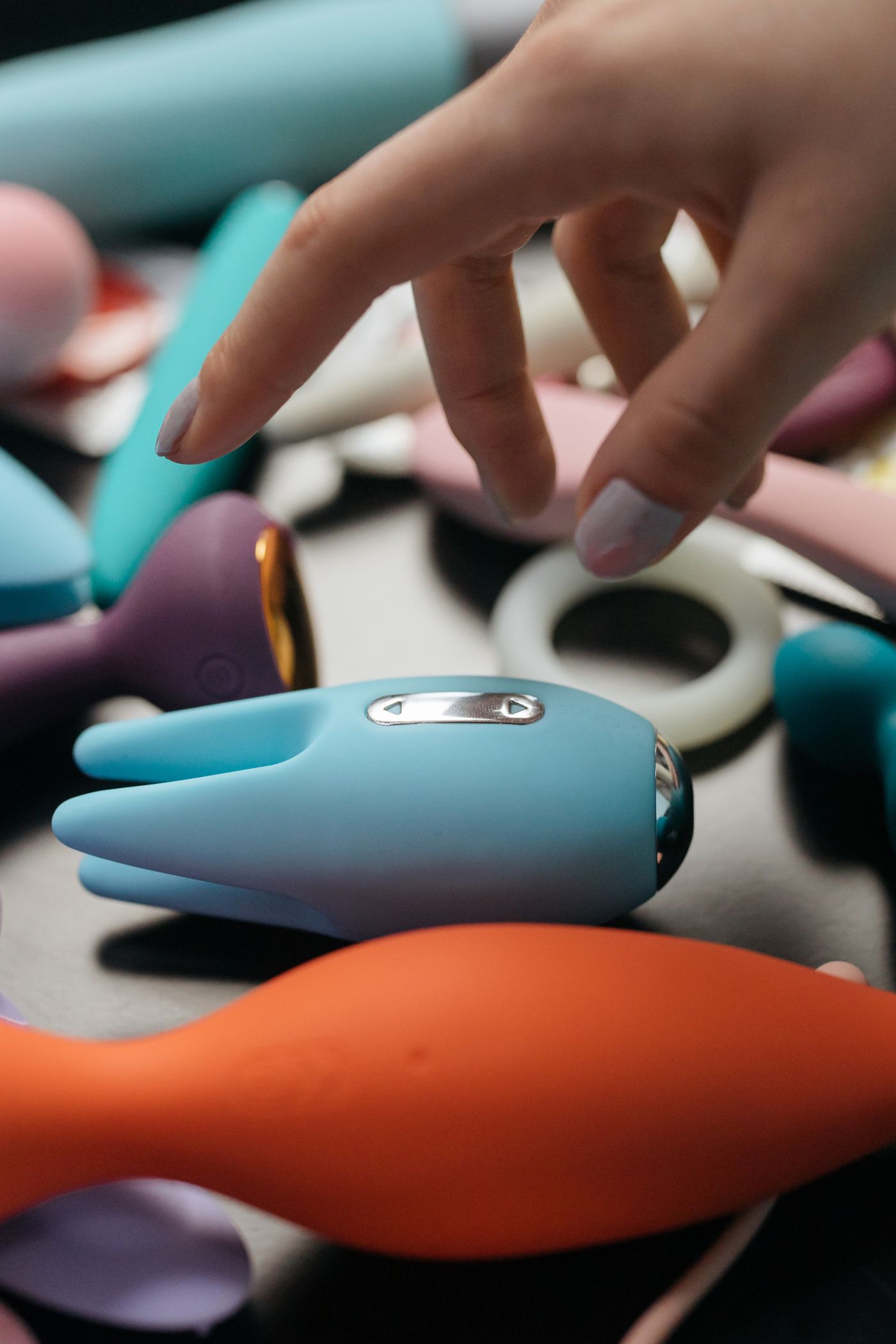
Group one: external
Anything that stays on the outside. Bullets, wands, air-pulse stimulators, most of what gets sold as a "clitoral" anything.
This is where most people should start, and it is the group with the widest range of price and quality. A cheap one and an expensive one do the same thing with different levels of refinement: smoother vibration, less noise, better battery, materials that last.
The differences inside this group are worth knowing. Vibration is a spread-out buzz that you can dampen by pressing harder. Air pulse is a pressure wave inside a sealed opening, and it does nothing if the seal breaks. Wands are the same mechanism as bullets with more mass behind it, which makes the vibration deeper rather than stronger.
Group two: internal
Anything designed to go inside. Dildos without motors, G-spot shapes, vibrating versions of both.
The variables here are size, curve and material rather than power. Size is the one people get wrong most often, in both directions — buying something larger than they want because the listing framed it as an upgrade, or buying something too small because they were cautious and finding it does nothing.
Material matters more in this group than in any other, because it is the one place where porosity has a direct hygiene consequence rather than a theoretical one.
Group three: shared
Rings, wearables, anything with a remote or an app.
This group has the largest gap between how it is marketed and how it works. The marketing is about closeness and spontaneity. The reality is that most of these are one-person devices in use: they sit in one place, and the second person is operating a control rather than doing anything else.
That is not a reason to avoid them. It is a reason to buy one for the right reason — because you want the control to be handed over, or because you want something that stays in place without being held. If you are buying it expecting it to be a shared experience in the moment, you will probably be disappointed by the mechanics.
App control is worth being sceptical about specifically. Bluetooth in the same room is fine. Anything routed through the internet adds a delay you can feel, and it fails when the connection does.
Group four: anal
Plugs, and anything else with an anal application.
This group has one non-negotiable design requirement that the others do not: a base that is wider than the widest part that goes in. Without it, the thing can be drawn in and not come back out, which is a hospital visit rather than an inconvenience.
If a product in this group has no flared base, no amount of good material or good reviews makes it safe. That single feature is the whole reason the category exists as a separate design.
Silicone is the material to look for here, because it is the one that can be cleaned properly and does not degrade. Soft materials feel better on insertion and are worse at everything else.
Not toys, but they decide whether the toys work
Lubricant, cleaner, and somewhere to put it.
A water-based lubricant is the default for anything silicone, and for anything used with a condom. Silicone lubricant lasts longer and is incompatible with silicone toys in the way described elsewhere on this site. Oil-based is for neither.
Cleaner matters mainly for anything you cannot rinse. Storage matters more than most people think, because a porous toy stored damp is a toy that will smell in a month.
Skipping these three is the most common way people spend money on a product and then have a bad experience with it.
How to choose the first one
Pick the group before the product. If you have not owned any of this before, group one is the low-risk choice: it is the most forgiving, the cheapest way to find out what you like, and the least dependent on getting a size right.
Move to group two when you know what you want internally. Move to group three when there is a second person and the point is the interaction. Group four is a separate decision with its own rules and should not be a first purchase made casually.
The one thing not to do is buy from several groups at once. It is the most expensive way to learn which one you actually wanted.
Questions that come up
Is a more expensive version of the same shape worth it?
Usually for materials and build, not for sensation. The mechanism is the same. What you pay extra for is silicone instead of TPE, quieter operation, and a battery that holds up.
Do the number of vibration modes matter?
Rarely. Most people settle on one or two settings within a week. A product with three good settings beats one with twenty bad ones.
Can one product cover more than one group?
Some claim to. In practice a product designed for two jobs does neither as well as two products designed for one, and the compromise is usually in the shape.
More guides
How to read a product listing
A listing is written for two audiences at once: the people who will check, and the people who will not. Once you can tell the two halves apart, most of the marketing stops working on you.
What you actually need first
Most first purchases fail for reasons that have nothing to do with the device. The order people buy things in is backwards, and the three items that decide whether it gets used again cost less than the device does.
Is it actually waterproof?
IPX7 is a real standard and most listings quote it correctly. What it does not tell you is that the test is done in clean, still, cold water on a brand-new unit, which is not the situation you are buying it for.